Fake Seafarer Job Offers on WhatsApp: How to Avoid Scams
An "urgent vacancy", €450 a day, joining in a few days and documents sent straight to a chat. We go through a real conversation with screenshots and show how to protect your documents and money.
In November 2026 we were contacted from several WhatsApp numbers that presented themselves as crewing companies. We replied and saved the chats. The pattern is always the same: a nice logo, a high day rate, joining "in a few days" and a request to send documents right away. Below are real screenshots, the warning signs, and a list of what to check before you reply.
What an "urgent vacancy" on WhatsApp looks like
The first message is a template and asks nothing about your experience: rank, day rate, a vessel with an IMO number and "joining in a few days". Then comes the question "Does this suit you?".
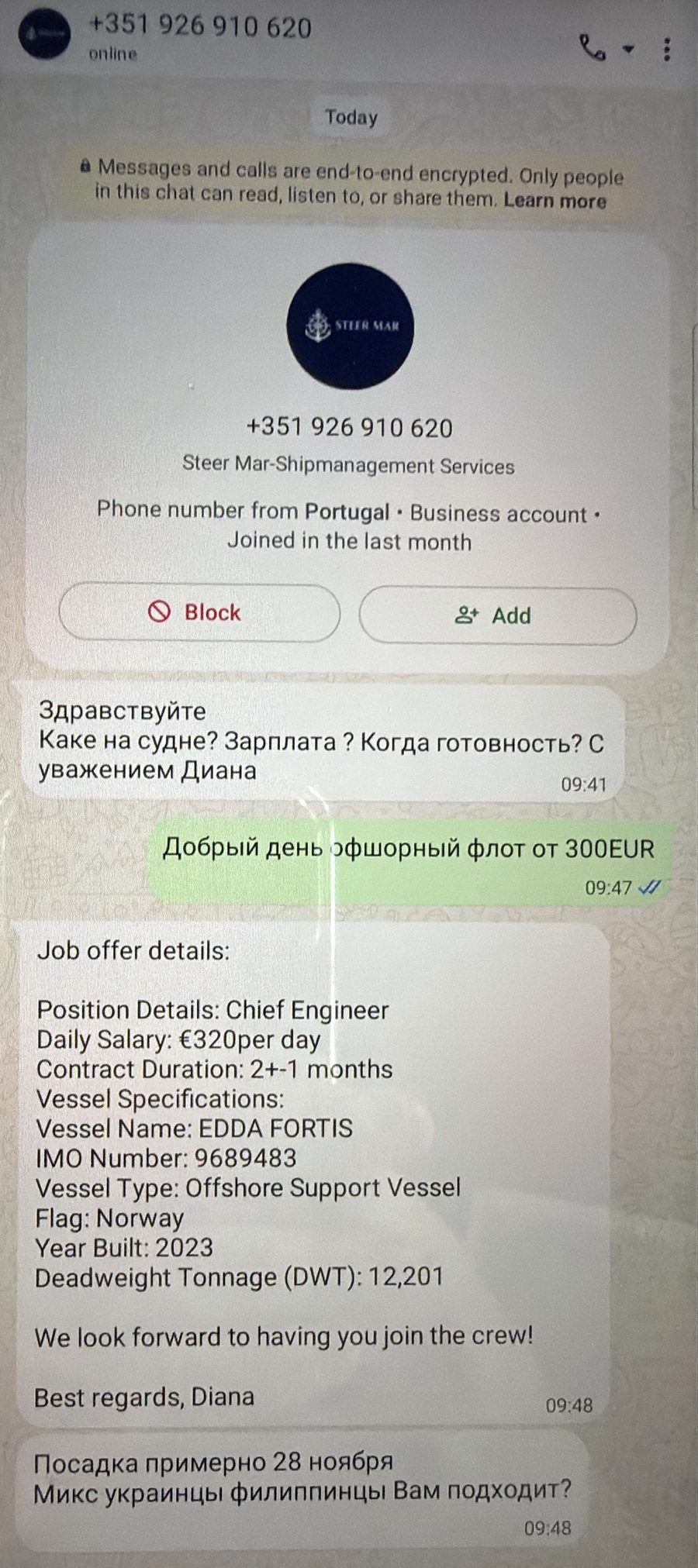
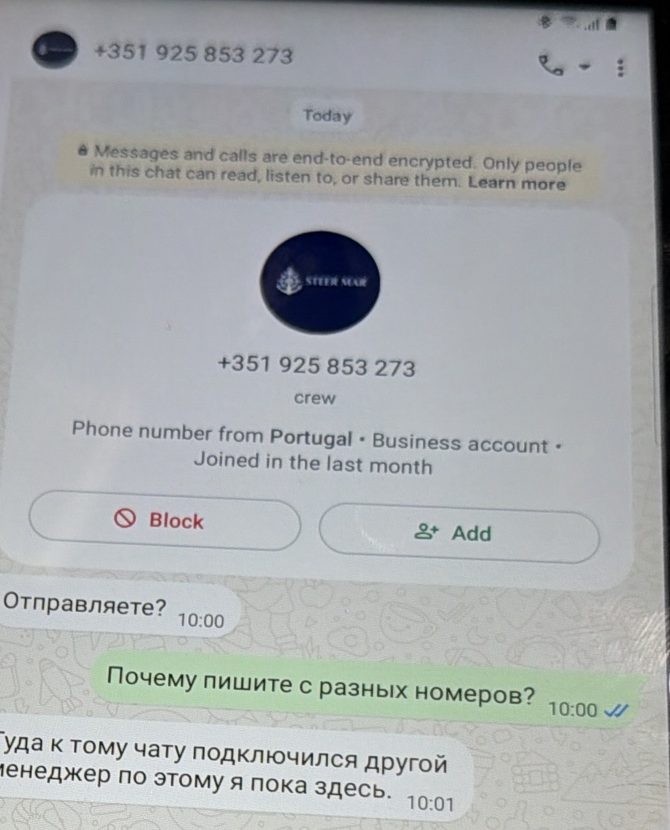
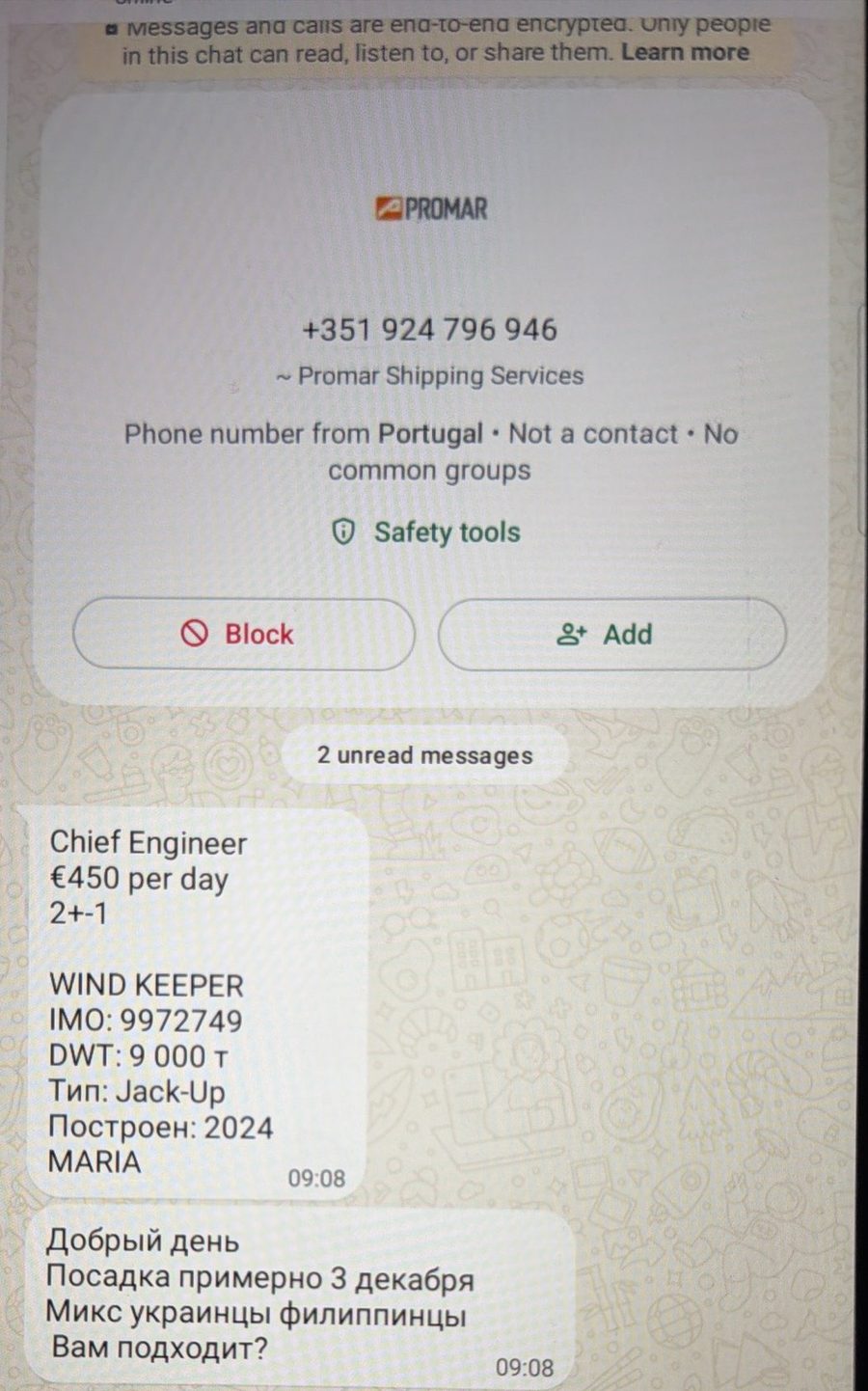
A few minutes later the conversation moves on to documents:
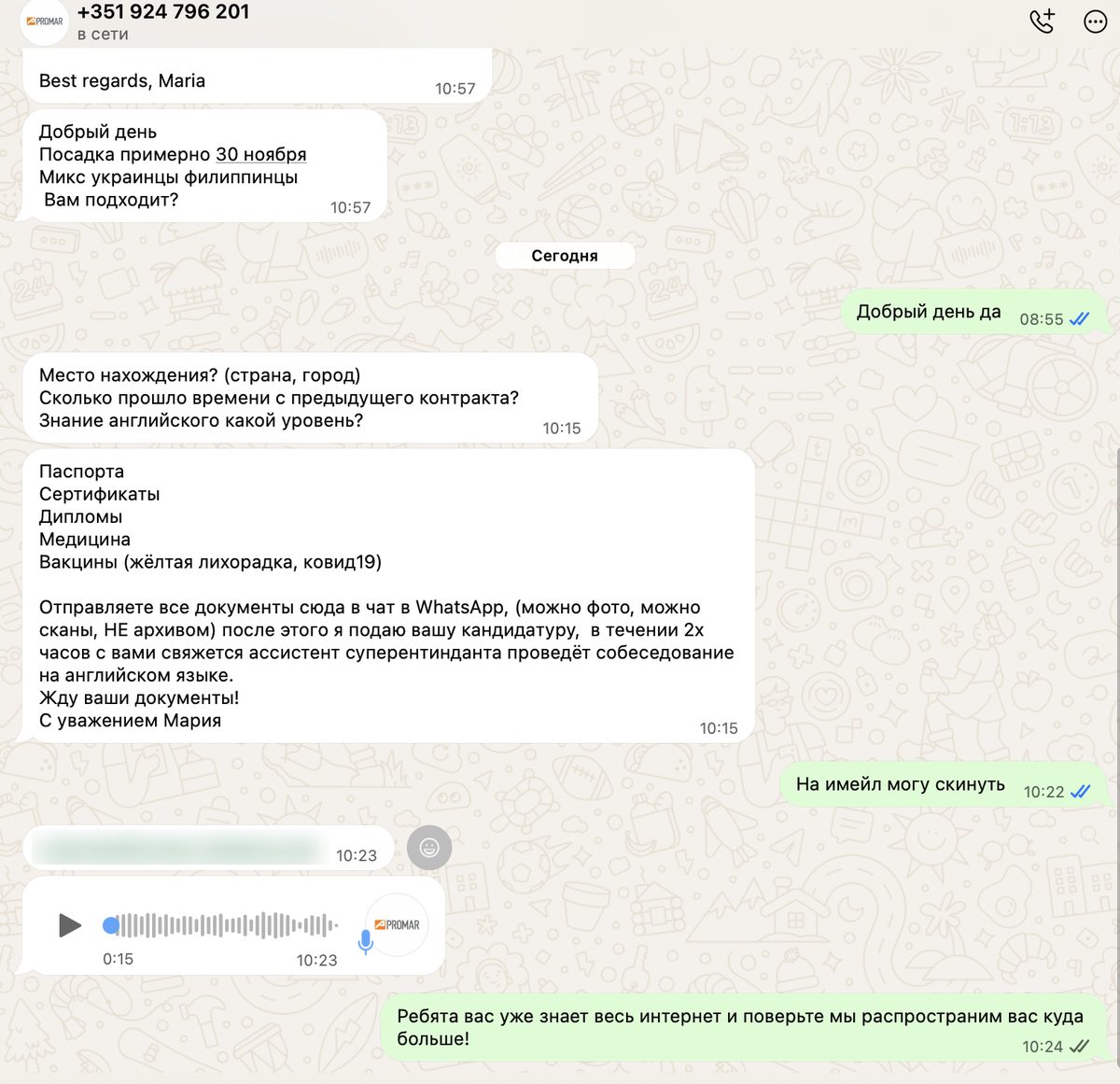
Company names and numbers are shown exactly as they appeared in the WhatsApp accounts. We do not know whether these are real companies or whether someone is using their name without permission, so please check everything yourself.
7 signs you are not dealing with a real crewing agency
- WhatsApp only. Portuguese numbers, WhatsApp Business accounts "joined in the last month", no common groups. Real agencies have a website, a corporate mailbox and an office.
- The same text for different vessels and dates. "Joining about 28 November", "30 November", "3 December": only the date changes, and the question "Ukrainian-Filipino mix. Does it suit you?" stays the same.
- Rate and joining date at once, no questions about your experience. A real recruiter wants your rank, sea service, certificates and availability, not just "does it suit you".
- A rate above the market. €320–450 per day for 2+1 months should make you suspicious, not happy.
- Pressure. "Joining in a few days", "interview within 2 hours", documents needed urgently.
- Documents sent to the chat as photos, "not as an archive". A passport, diplomas, medicals and vaccinations sent to a stranger's WhatsApp number are a ready-made kit for identity theft.
- Changing numbers and "managers". Asked "why do you write from different numbers?", the answer is "another manager joined".
What usually happens next
We did not send any documents and did not take the chat as far as a payment, so we cannot say how it would have ended for us. But the scheme is familiar to seafarers. First comes a "hot" vacancy, then you are told you "urgently" need an interview, a medical exam or a visa at a "partner clinic" or through an "intermediary", paid in advance. After payment the contract disappears and so does the person. The second variant is to collect copies of your passport, diplomas and medical data and use them in other frauds.
Remember the main rule: under the MLC 2006 convention a seafarer does not pay for employment. There should be no "seat reservation", "contract guarantee" or advance payment.
What to check before you reply
- Find the company's real website and call the office on the number given there (not in the chat). Ask whether the vacancy exists and whether this manager works there.
- Check the e-mail. Messages should come from the company's own domain, not from a free mailbox. Make sure the domain matches the official website.
- Look up the vessel by IMO number in public vessel databases: who owns it, who manages it, and whether such a crew is needed there.
- Send documents only after checking and only to the corporate e-mail. A passport, diploma and medical data are not needed for a first application, your CV is enough.
- Do not pay for a job. Arrange a medical, visa or courses only on an official letter from the company and at an institution you have checked yourself, not through a "partner" link.
- Do not give in to pressure. The more urgent the request, the more carefully you should check.
- Block the number and report it in WhatsApp ("Block" → "Report") and send your colleagues the link to this article.
If you have already sent documents or money
Warn the real agency and your bank if you paid or sent card details. Watch out for loans or calls made in your name and go to the police. The sooner, the better.
How we work, so you are not confused
CV-Sender sends your CV to companies by e-mail only, and the replies come to your mailbox and your personal cabinet. We do not ask for documents in WhatsApp and we never take money "for a vacancy". If you are not sure where a reply came from, check the sender's address and the company's domain.
Frequently asked questions
How can I tell that a seafarer job offer on WhatsApp is a scam?
Signs: contact only on WhatsApp from an unknown number, a template text with no questions about your experience, a rate above the market, pressure, a request for your passport and documents in the chat, and an advance payment for a medical, visa or "seat reservation".
Can a seafarer be asked to pay for a job on a ship?
No. Under the MLC 2006 convention a seafarer does not pay for employment. A request to pay for a vacancy, a "contract guarantee" or a "seat reservation" is a sign of a scam.
Where should I send my documents when applying for a job?
Send only your CV with the application. Send copies of your passport, diplomas and medicals only after you have checked the company, and only to its corporate e-mail, not to WhatsApp.